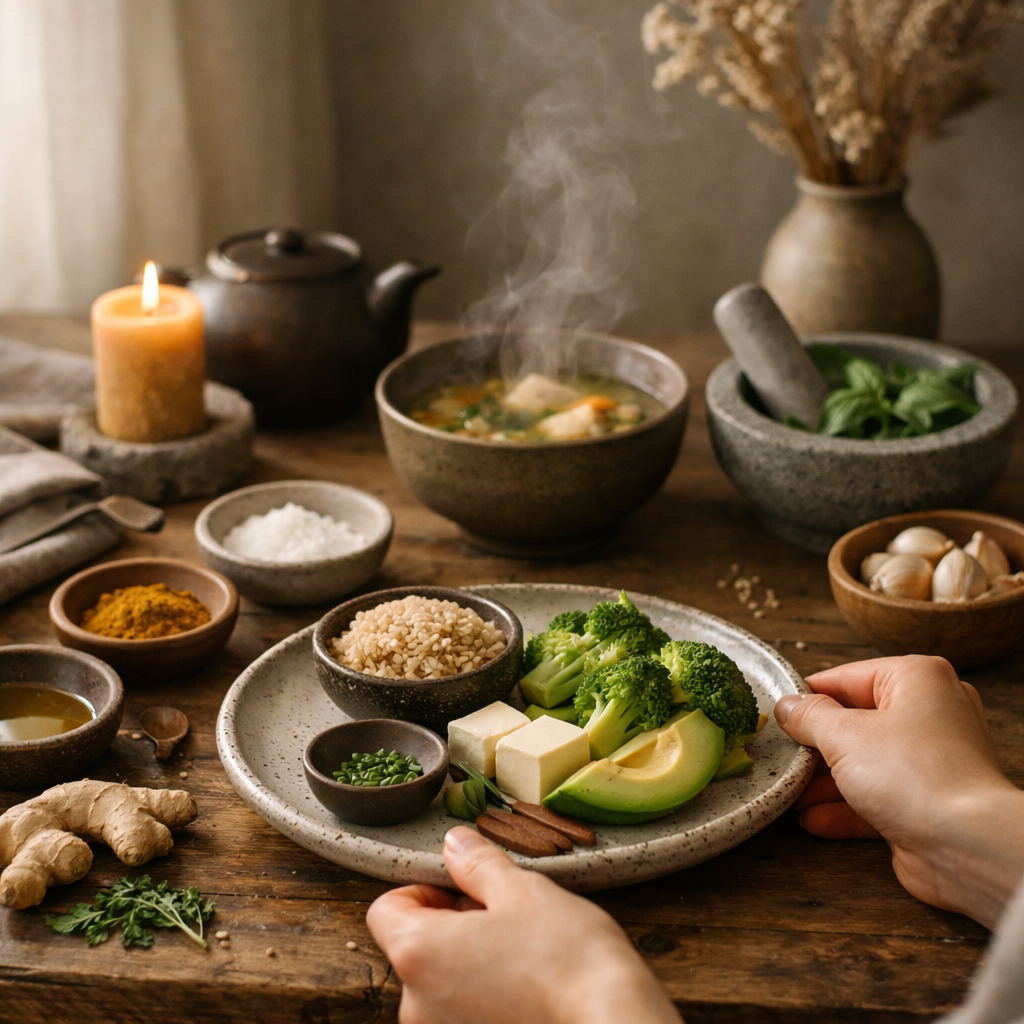
Mindful Culinary Traditions: Healing Through Conscious Cooking
I learned to cook from my grandmother in a kitchen where no recipe was ever written down. She measured turmeric in the cup of her palm, tasted broth with her eyes closed, and hummed folk songs while kneading bread dough that somehow always rose to the same golden perfection. What she was doing - though neither of us had the vocabulary for it at the time - was practicing one of the oldest forms of mindfulness on earth: conscious cooking.
Culinary traditions are far more than collections of recipes. They are living, breathing systems of wisdom that encode how cultures understood health, community, season, and spirit through the universal language of food. In a world that increasingly treats meals as fuel to be consumed quickly between obligations, returning to these traditions is not nostalgic indulgence - it is a genuine path to healing.
The Wisdom Embedded in Traditional Cooking
Ayurvedic Cooking: Food as Constitution
The Ayurvedic culinary tradition, rooted in over 5,000 years of Indian healing philosophy, does not ask “What should I eat?” It asks “Who am I, and what does my body need right now?” Food is prescribed according to your dosha (constitutional type) - Vata, Pitta, or Kapha - and adjusted seasonally.
A Vata constitution, prone to anxiety and dryness, benefits from warm, grounding foods cooked with ghee and warming spices like cinnamon and ginger. A Pitta constitution, running hot and intense, finds balance in cooling foods with bitter and sweet tastes - fresh greens, coconut, and fennel. Kapha types, who tend toward heaviness and stagnation, thrive on light, pungent, and stimulating meals with plenty of black pepper, mustard seed, and leafy greens.
What makes Ayurvedic cooking mindful is not just what you eat but how you prepare and consume it. Meals are cooked with intention, served with beauty, and eaten in a calm environment. The act of cooking itself is considered a form of seva - selfless service that nourishes both the cook and those who receive the food.
Japanese Washoku: The Art of Harmony
In 2013, UNESCO recognized Japanese washoku as an Intangible Cultural Heritage - and the designation goes far deeper than sushi and ramen. Washoku is a philosophy of balance: balance between flavors (sweet, sour, salty, bitter, umami), balance between colors on the plate, and balance between the meal and the season.
The Japanese concept of shun - eating ingredients at their peak seasonal freshness - is a form of mindfulness that connects the eater to the rhythms of the natural world. Spring brings bamboo shoots and cherry blossom-inspired presentations. Autumn calls for mushrooms, persimmons, and warming root vegetables. By following shun, every meal becomes an act of attunement to the living earth.
Mediterranean Communal Dining
The Mediterranean culinary tradition teaches us that how we eat is as important as what we eat. Meals in Mediterranean cultures are communal events - shared around tables where conversation flows as freely as olive oil. Rushed eating is culturally unthinkable.
Research consistently shows that the Mediterranean diet is associated with lower rates of heart disease, depression, and cognitive decline. But researchers increasingly suspect that the social and mindful aspects of Mediterranean eating - the slow pace, the communal table, the pleasure taken in preparation - contribute to these health outcomes as much as the olive oil and vegetables themselves.
Bringing Mindful Cooking Into Your Kitchen
You do not need to adopt an entirely new dietary system to benefit from mindful culinary traditions. Here are practical ways to infuse your daily cooking with presence, intention, and healing.
Create a Sacred Kitchen Space
Before you cook, take thirty seconds to clear your workspace and set an intention. This might be as simple as “I cook with gratitude” or “This meal nourishes my family’s health.” Light a candle if that feels right. The goal is to signal to your nervous system that you are shifting from doing mode to being mode.
Engage All Five Senses
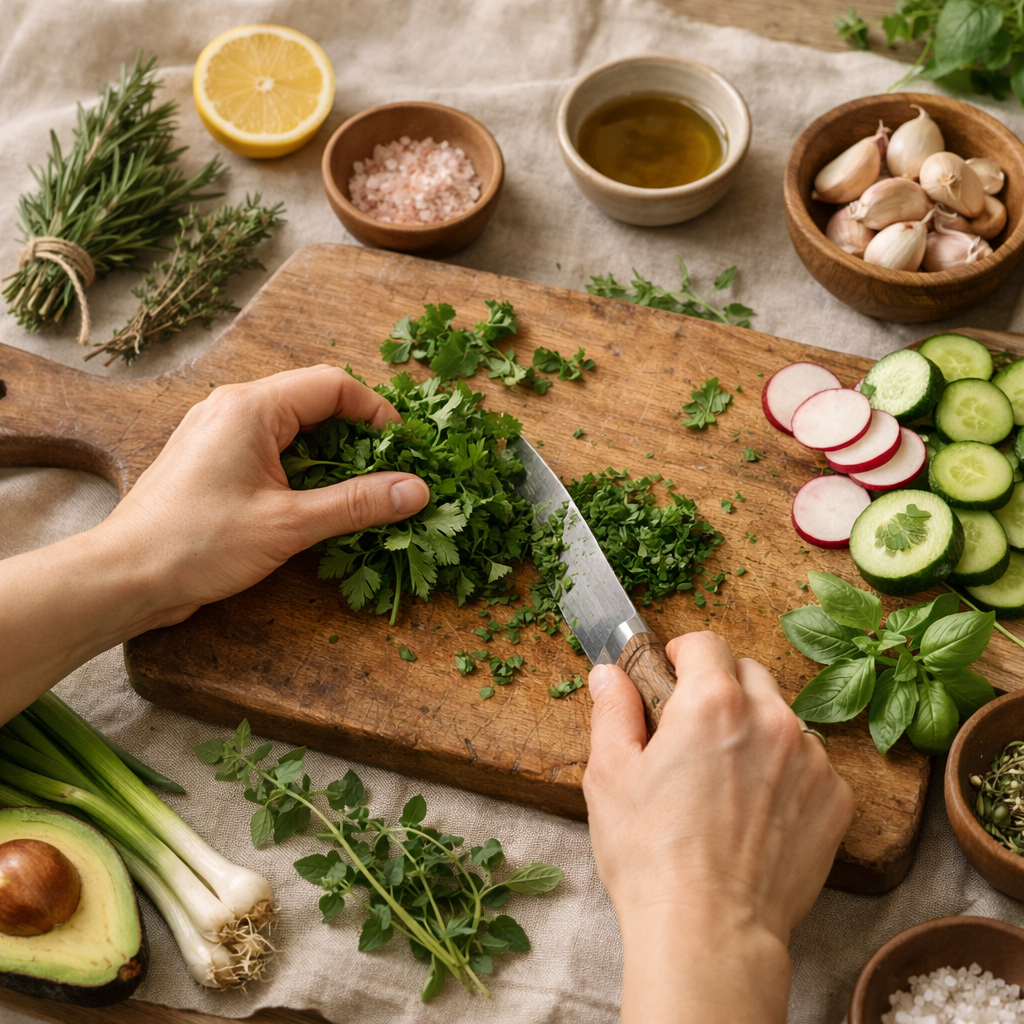
Mindful cooking is sensory meditation. As you wash vegetables, feel the cool water and the texture of each skin. When you chop, listen to the rhythm of the knife against the cutting board. Inhale the fragrance of garlic hitting warm oil. Taste as you go, adjusting with intuition rather than rigid measurement. Notice the colors on your cutting board and arrange the plate with visual intention.
Cook with Healing Spices
Many culinary traditions understood the medicinal properties of spices long before laboratory research confirmed them. Building a collection of healing spices is one of the most accessible ways to connect mindful cooking with holistic wellness.
- Turmeric: Anti-inflammatory and antioxidant. Central to Ayurvedic cooking. Pairs with black pepper for enhanced absorption.
- Ginger: Aids digestion, reduces nausea, and warms the body. A staple in both Asian and Ayurvedic traditions.
- Cinnamon: Balances blood sugar and adds warmth. Used medicinally in Traditional Chinese Medicine for centuries.
- Cumin: Supports digestion and iron absorption. Essential in Middle Eastern, Indian, and Mexican culinary traditions.
| Product | Product Name | ASIN | Price ($) | |———|————-|——|———–| | Spice Set | Organic Healing Spice Collection - Turmeric, Ginger, Cinnamon | B0CXYZ5678 | 24.99 | | Mortar & Pestle | Granite Mortar and Pestle Set - Traditional Spice Grinding | B07BQZJ1K3 | 29.99 | | Cookbook | The Ayurvedic Cookbook - Conscious Cooking for Wellness | B0CXYZ9012 | 18.95 |
Explore mindful cooking essentials on Amazon ›
The Deeper Nourishment
There is a moment in mindful cooking when something shifts. The to-do list fades. The phone stops calling. The only thing that exists is the warmth of the stove, the fragrance rising from the pot, and the quiet satisfaction of creating something nourishing with your own hands. That moment is not a byproduct of cooking - it is the point.
Culinary traditions from every corner of the world understood this. They built their food cultures not just around nutrition but around presence, community, and the sacred act of transforming raw ingredients into sustenance. When we return to these traditions - even in small ways, even in a modern kitchen with a busy schedule - we reconnect with a lineage of wisdom that has been feeding both body and soul for millennia.
Start tonight. Choose one ingredient with intention. Prepare it with attention. Eat it with gratitude. That is the beginning of a mindful culinary practice, and it is more than enough.
Discover traditional cooking tools and ingredients on Amazon ›
Frequently Asked Questions
What are mindful culinary traditions?
Mindful culinary traditions are cooking and eating practices rooted in cultural wisdom that emphasize presence, intention, and connection during food preparation and meals. Examples include Japanese washoku (harmony in food), Ayurvedic cooking based on constitutional types, and Mediterranean communal dining. These traditions treat cooking as a meditative practice rather than a chore.
How does mindful cooking improve mental health?
Mindful cooking engages all five senses and anchors you in the present moment, functioning similarly to a meditation practice. Research shows that cooking mindfully reduces cortisol levels, improves mood, and fosters a sense of accomplishment. The repetitive motions of chopping, stirring, and kneading have been shown to activate the parasympathetic nervous system, promoting relaxation.
What is the connection between culinary traditions and healing?
Many traditional food systems are inherently medicinal. Ayurvedic cooking uses specific spices (turmeric, cumin, ginger) to balance bodily systems. Traditional Chinese Medicine pairs foods with seasons and constitutional needs. Japanese cuisine emphasizes fresh, seasonal ingredients that provide optimal nutrition. These traditions understood food as medicine long before modern nutritional science confirmed many of their principles.
How can I start cooking more mindfully?
Begin by eliminating distractions - turn off screens and music during food preparation. Focus on one task at a time: feel the texture of vegetables as you wash them, listen to the sizzle of oil, inhale the aroma of spices. Express gratitude for each ingredient. Start with simple recipes and gradually incorporate traditional techniques from cultures that inspire you.